





Best Power Tools for DIY Home Projects in the UK (2026 Guide)
Walk into any UK garage and you’ll usually find one of two things.
- A perfectly organised wall of tools…
- Or a drawer with three screwdrivers, a half-dead drill, and a tape measure that’s lost its hook.
If you’re serious about tackling DIY properly — whether that’s putting up shelves, building decking, renovating a bathroom, or finally sorting the shed — having the best power tools for DIY UK homes makes a massive difference.
- Not the most expensive.
- Not the most complicated.
- Just the right ones.
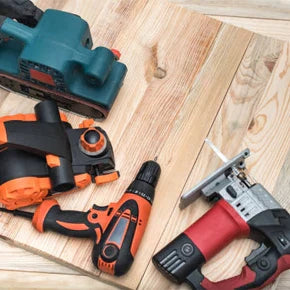
This 2026 guide walks through the must have power tools for home improvement, especially for UK properties, budgets and typical projects.
Why Choosing the Right Power Tools Matters in the UK
British homes come with their own quirks:
- Brick and masonry walls
- Older wiring layouts
- Compact spaces
- Garden projects that battle damp weather
- Solid timber joists
The tools you need here aren’t always the same as what you see in American DIY videos.
The key isn’t owning everything.
It’s owning the tools you’ll use repeatedly.
So let’s build a proper DIY tools checklist UK homeowners can rely on.
1. Cordless Combi Drill (Your Absolute Essential)
If there’s one tool every UK DIYer needs, it’s a cordless combi drill.
- It drills.
- It drives screws.
- It handles masonry (with the hammer function).
- It assembles furniture.
- It installs curtain rails.
- It mounts shelves.
A quality combi drill is the foundation of any beginner power tools UK setup.
Why Go Cordless?
Cordless power tools for DIY projects are now powerful enough for almost all home jobs. No trailing cables. No extension leads through windows. No hunting for sockets.
Look for:
- At least 18V battery
- Lithium-ion batteries
- Variable speed control
- Hammer function for brick walls
For UK homes with brick internal walls, that hammer mode is non-negotiable.
2. Impact Driver (The Game-Changer You Didn’t Know You Needed)
Once you’ve used an impact driver, you won’t go back.
While your drill can drive screws, an impact driver does it better — especially for:
- Decking
- Timber framing
- Fence panels
- Long structural screws
It delivers rotational force in bursts, meaning less wrist strain and fewer stripped screws.
For anyone planning outdoor projects in 2026, this tool quickly becomes one of the essential tools for home improvement.
3. Circular Saw (For Serious Cutting)
If you’re cutting timber regularly, a circular saw saves hours.
Perfect for:
- Cutting worktops
- Trimming doors
- Building shelves
- Outdoor structures
A circular saw provides straight, clean cuts far quicker than a handsaw.
Cordless versions are now strong enough for most domestic use — and far more convenient in a British garden setting.
4. Multi-Tool (The Underrated Hero)
If you only occasionally renovate, this might become your favourite tool.
An oscillating multi-tool handles:
- Cutting skirting boards
- Trimming door frames
- Sanding corners
- Scraping sealant
- Removing grout
It’s incredibly versatile — especially in tight UK spaces where larger tools struggle.
For DIY renovation safety gear and control, multi-tools offer precision without excessive force.
5. Jigsaw (For Curves and Detail Work)
A jigsaw allows you to cut curves, shapes, and intricate designs.
Ideal for:
- Kitchen worktops
- Decorative shelves
- Cutting laminate flooring
- Garden features
It’s lightweight, easy to use, and beginner-friendly.
If you’re expanding your DIY tools checklist UK, this is often the next step after your drill.
6. Orbital Sander (For a Proper Finish)
Plenty of people skip this and regret it.
If you:
- Refinish furniture
- Sand doors
- Prep walls
- Smooth decking
An orbital sander saves time and produces a much cleaner finish than manual sanding.
Look for dust extraction compatibility — especially indoors.
UK homes often have smaller rooms, so dust control matters.
7. Angle Grinder (When You Need Power)
This isn’t for everyone, but if you:
- Cut metal
- Trim paving slabs
- Remove rust
- Work on fencing
An angle grinder becomes invaluable.
It’s powerful — so safety is key. But for certain outdoor jobs, nothing replaces it.
Cordless vs Corded: What’s Best for UK DIY?
In 2026, cordless power tools for DIY are more capable than ever.
Go Cordless If:
- You move around the house frequently
- You work outdoors
- You want convenience
- You dislike cable management
Go Corded If:
- You’re on a tighter budget
- You rarely move the tool
- You need consistent long runtime
For most modern homeowners, cordless systems offer flexibility and efficiency — especially when sticking within one battery platform.
Power Tool Buying Guide UK: What Actually Matters
It’s easy to get distracted by flashy features. Here’s what genuinely matters:
-
Battery Platform: Sticking to one brand battery system saves money long term.
-
Build Quality: Tools should feel balanced, not flimsy.
-
Warranty: A decent warranty shows confidence in durability.
-
Availability of Parts: Batteries and blades should be easy to replace in the UK.
-
Intended Use: Don’t buy industrial-grade equipment if you’re assembling flat-pack furniture twice a year.
Affordable Power Tools UK: Spend Smart, Not Big
You don’t need to overspend.
Mid-range tools often offer:
- Excellent durability
- Strong battery performance
- Good warranties
- Solid performance for domestic projects
Premium tools make sense if:
- You use them weekly
- You renovate often
- You tackle heavy-duty jobs
For occasional DIY, affordable power tools UK options perform brilliantly in 2026.
Beginner Power Tools UK: Start Here
If you’re brand new to DIY, start simple:
- Cordless combi drill
- Impact driver
- Orbital sander
- Jigsaw
That setup handles 80% of home projects.
Add specialist tools later.
Safety First (Always)
Power tools are empowering — but they demand respect.
Basic essentials:
- Eye protection
- Gloves
- Dust mask
- Stable footing
- Clear workspace
DIY renovation safety gear isn’t optional — especially when cutting masonry or sanding indoors.
Confidence comes from preparation.
A Practical DIY Tools Checklist UK Homeowners Can Use
Here’s a simple 2026 checklist:
Core Tools
- Cordless combi drill
- Impact driver
- Circular saw
- Jigsaw
Finishing Tools
- Orbital sander
- Multi-tool
Heavy-Duty Additions
- Angle grinder
You don’t need all of them immediately. But this roadmap helps you build sensibly.
Final Thoughts
The best power tools for DIY UK homeowners aren’t the ones that look impressive on a shelf.
- They’re the ones you reach for repeatedly.
- They make projects smoother.
- They reduce frustration.
- They help you finish properly.
Whether you’re upgrading your kitchen, building garden furniture, or finally hanging those shelves straight — the right tools turn hesitation into action.
And in 2026, DIY isn’t about doing everything yourself.
It’s about having the confidence to start.