


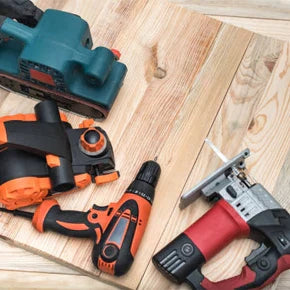


Corded vs Cordless Power Tools – Which Is Better for UK Professionals?
Ask ten UK tradespeople about corded vs cordless power tools, and you’ll get ten confident answers.
Some will swear by corded — “Nothing beats constant power.”
Others won’t touch a cable anymore — “Once you go cordless, you never go back.”
The truth? In 2026, the conversation isn’t about which is “better” overall. It’s about which is better for the job, the environment, and the way you work.
If you’re a builder, electrician, plumber, carpenter or site contractor, this guide breaks it down properly — no hype, no brand bias, just real-world comparison.
Why This Debate Still Matters in the UK
British job sites aren’t always straightforward.
You’re dealing with:
- Older properties with limited sockets
- Outdoor work in unpredictable weather
- Tight terraces and loft conversions
- Long garden runs without easy power access
- Commercial builds with strict safety rules
So the decision between corded and cordless power tools isn’t theoretical. It affects productivity, safety and even fatigue over a full working week.
Corded Power Tools: The Traditional Workhorse
Let’s start with corded tools.
They’ve powered construction sites across the UK for decades — and they’re still very much alive in professional settings.
Corded Power Tools Pros and Cons
The Pros
1. Consistent, Unlimited Power
Plug in and go. No charging. No battery swaps. No downtime.
For heavy-duty cutting, grinding or demolition, corded tools deliver steady torque all day.
2. Often More Powerful for the Price
For the same budget, corded tools often deliver higher sustained output compared to battery-powered equivalents.
3. No Battery Degradation
You don’t have to think about battery life power tools, charging cycles or long-term battery replacement costs.
The Cons
1. Limited Mobility
Cables slow you down. Extension leads become part of your daily routine.
On a busy construction site, that’s not ideal.
2. Trip Hazards
Loose cables create safety risks, especially in tight renovation environments.
3. Not Ideal for Outdoor or Remote Jobs
Working in a garden, roof space or remote build without reliable power? Corded tools quickly become impractical.
Cordless Power Tools: The Modern Standard
Ten years ago, cordless tools were seen as a compromise.
In 2026? They’re often the default choice for UK professionals.
Cordless Tools Advantages and Disadvantages
The Advantages
1. Total Mobility
No cables. No extension reels. No hunting for sockets.
For roofing, scaffolding, loft conversions and garden projects, this changes everything.
2. Safer Working Environment
Fewer trailing leads means fewer trip hazards — especially important on busy construction sites.
3. Faster Setup and Pack-Down
Turn up, grab your kit, start working. That efficiency adds up over a year.
4. Brushless Motor Tools Are a Game-Changer
Modern brushless motor tools are more efficient, generate less heat, and extend battery life significantly.
They also tend to last longer — crucial for professionals who use tools daily.
The Disadvantages
1. Battery Life Management
You need charged batteries. Always.
On long days, battery life power tools becomes part of the workflow.
2. Higher Upfront Cost
Quality cordless platforms aren’t cheap — especially when buying multiple batteries.
3. Slightly Heavier (Sometimes)
Battery packs add weight, particularly on larger tools like SDS drills or circular saws.
Battery Life: The Real Deciding Factor
For many professionals, this is where the debate settles.
Modern lithium-ion batteries, especially 18V and 20V platforms, have dramatically improved.
But let’s be realistic:
- Heavy drilling through brick will drain batteries faster.
- Continuous grinding eats through power.
- Cold UK winter mornings can reduce battery efficiency.
However, with two or three batteries in rotation, most professionals rarely experience downtime.
For many trades, cordless tools are now powerful enough for 90% of daily tasks.
Power Tools for Construction UK: What Works on Site?
Different trades, different needs.
Builders & General Construction
Often use:
- Cordless drills
- Cordless impact drivers
- Cordless circular saws
- Corded angle grinders for heavy cutting
Why? Mobility during framing and fitting matters. But grinding concrete still benefits from steady corded power.
Electricians
Cordless dominates.
Working in lofts, tight cupboards, and new builds without permanent power makes cordless essential.
Plumbers
Cordless pipe cutters, drills and inspection tools make mobility key — especially in awkward spaces.
Carpenters & Joiners
A mix.
Portable tools often cordless.
Workshop equipment often corded for consistency.
Best Cordless Power Tools UK Professionals Look For
When selecting cordless tools today, professionals usually prioritise:
- High Ah battery capacity
- Brushless motors
- Strong torque ratings
- Reliable UK warranty
- Availability of replacement batteries
The biggest mistake? Mixing too many battery systems.
Sticking to one platform keeps charging simple and cost-effective.
Professional Power Tools UK: Durability Matters
Professionals aren’t buying tools for occasional DIY.
They need:
- Drop resistance
- Dust protection
- Weather durability
- Long-term reliability
Brushless motor tools generally outperform brushed models in professional environments.
They:
- Run cooler
- Require less maintenance
- Offer better energy efficiency
In 2026, most serious cordless systems for professionals are brushless by default.
So… Corded vs Cordless Power Tools – Which Wins?
It depends on your workload.
Choose Corded If:
- You perform heavy demolition daily
- You require uninterrupted, maximum torque
- You work mainly in one fixed location
- You want lower upfront costs
Choose Cordless If:
- You move between sites frequently
- You work outdoors or in unfinished buildings
- You prioritise speed and flexibility
- You want a cleaner, safer work area
For most UK professionals today, cordless handles the majority of daily tasks — with corded reserved for extreme, high-load applications.
The 2026 Reality: Hybrid Setups Are Normal
Many experienced tradespeople don’t choose one side.
They run hybrid kits:
- Cordless drills and drivers
- Cordless saws
- Corded grinders or SDS drills
That balance offers flexibility without sacrificing power.
The debate isn’t either/or anymore.
It’s about using the right tool for the right task.
Final Thoughts
The corded vs cordless power tools conversation has evolved.
Corded tools still deliver unmatched consistency for heavy-duty work.
Cordless tools now deliver freedom, speed and serious power — especially with modern brushless motor tools and improved battery life power tools technology.
For UK professionals in 2026, the smartest approach isn’t loyalty to one type.
It’s building a system that matches:
- Your trade
- Your workload
- Your working environment
- Your long-term efficiency
Because in the end, productivity isn’t about what powers the tool.
It’s about how well the tool supports you.