



Why Do My Rivets Keep Pulling Out?
Securing metal sheets, vehicle trim, or guttering parts with blind fasteners should make a permanent, vibration-proof connection, but it can go off track fast. You squeeze the handles on your tool, you hear that familiar pop when the mandrel breaks off, and you assume the job is finished. Then, just a few days later, you notice the joint starts rattling loose, or the metal cap gets pulled straight through the mounting hole with the tiniest bit of physical stress.
Each pop rivet has a particular “grip range,” meaning the maximum combined thickness of material it can clamp securely. If the rivet body is too short for what you’re attaching, the internal mandrel will shear off too early, before the hidden tail has had time to expand enough to create a broader, solid clamping head on the back side of the panel.
Instead of locking the metal sheets in a tight, gripped hold, the unexpanded shank just slips back through the opening, and your whole assembly ends up falling apart.
The Headaches of loose and failing blind fixings
Relying on poorly installed or mismatched fasteners introduces several frustrating workshop and maintenance problems:
Rattling and Vibrating joints: Loose panels keep rubbing against each other constantly, making those annoying sounds and gradually wrecking the mounting holes over time , like really over time.
Water and moisture leaks : Little gaps in the guttering or those automotive panels lets rainwater slip through, which then causes internal corrosion , plus water damage from the inside.
Sheared fastener shanks: When a joint is loose, the metal panels move back and forth, applying a cutting action on the aluminum body until it snaps all the way through.
Ugly surface scratches: A loose, spinning rivet head grinds along painted bodywork or polished sheet metal , and it leaves that nasty swirl marks, you know, the kind you can see in certain light.
Sizing Your Fasteners Accurately for a Solid Lock
The most effective way to stop your fasteners from pulling out is to establish a perfect balance between the thickness of your material, the size of your drill bit, and the grip length of your rivet. You must measure the total thickness of the panels you are joining and select a fastener with a grip range that extends slightly beyond that measurement.
Additionally, the hole you drill must match the outer diameter of the rivet sleeve perfectly. If the drilled hole is even half a millimeter too wide, the expanding tail will not have enough metal resistance to grip onto, causing it to distort and pull straight through. Combining a precisely drilled pilot hole with a high-strength steel or aluminum blind fastener guarantees a permanent, industrial-strength bond that resists prying forces effortlessly.
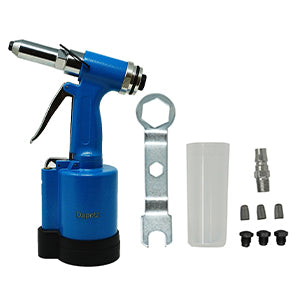
For a comprehensive, heavy-duty solution to your fastening projects, the Dapetz Hand Riveter Gun Set with 650 Pop Rivets is an ideal workshop kit. This trade-strength tool includes four interchangeable nosepieces and a massive assortment of 650 premium rivets in standard 2.4mm, 3.2mm, 4.0mm, and 4.8mm diameters, giving you the exact size needed for any sheet metal task.
Why a Comprehensive Multi-size kit beats Guesswork
Investing in a proper riveter gun set with an extensive assortment of fasteners provides clear practical advantages:
Perfect Grip Matching: Having multiple lengths and diameters nearby means you will never have to compromise with a short, weak fastener.
Interchangeable Nosepieces: The included tool wrench lets you swap between slim 2.4mm pins and heavy-duty 4.8mm stems in seconds.
Comfortable Turning Leverage: Ergonomic PVC cushion grips allow you to apply massive mechanical crushing force to steel rivets without straining your hands.
Frequently Asked Questions
1.What happens if I use a drill bit that is too large for the rivet?
The rivet will fail to clamp properly. As you squeeze the tool, the expanding tail will pull straight through the oversized hole instead of backing up against the rear sheet.
2.Can I use aluminum rivets to join heavy steel panels?
Aluminum rivets are best for light metal, plastic, and aluminum sheets. For structural steel panels under high stress, you should use heavy-duty steel rivets to prevent the joint from stretching.
3.Why is my riveter gun failing to grip or pull the mandrel wire?
This usually means the internal pulling jaws inside the gun head are clogged with metal shavings or need a drop of light machine oil to slide smoothly.
4.Do I need to use a backup washer on soft materials?
Yes. When riveting soft plastics, leather, or thin timber, sliding a small metal backup washer over the tail end before popping ensures the expanding metal has a solid surface to clamp against.
5.How do I remove an old or loose rivet safely?
Simply take a drill bit that matches the inner diameter of the rivet head, place it in the center pip, and drill straight through to pop the flange off cleanly without damaging the panel.